


Development and Implementation of a Tendon-Driven Continuum Robot: Project Dr. Otto Octavius


This project presents the design, implementation and testing of a Tendon-Driven Continuum Robot (TDCR) based on the fictional character "Dr. Otto Octavius". The project aims to explore the capabilities and applications of a semi-flexible robotic system, similar to the muscular structure of an octopus tentacle. The robot consists of multiple segments and sections connected by universal joints, actuated by tendons driven through a custom-designed electronics and communication system, and remotely controlled by a data acquisition system based on IMU sensors.
Context
Advances in robotics have made it possible to create increasingly complex and efficient mechanisms capable of replicating movements and functions that were previously exclusive to living beings (bioinspired). One notable area of this evolution is the development of tendon-driven robots, a technology that offers flexibility and precision when manipulating objects or moving through space. The system was therefore developed based on the following related research:


The backbone was studied as a semi-rigid system made of universal joints allowing motion in and per section, with the following state space:
Methodology and Materials
The development of the project involved several key stages, including:
- Simulation and Torque Calculation: A detailed simulation was carried out to compute the torque needed to move the robot, taking into account spring compression and material resistance, first approximating the values through a vector space, shown below:
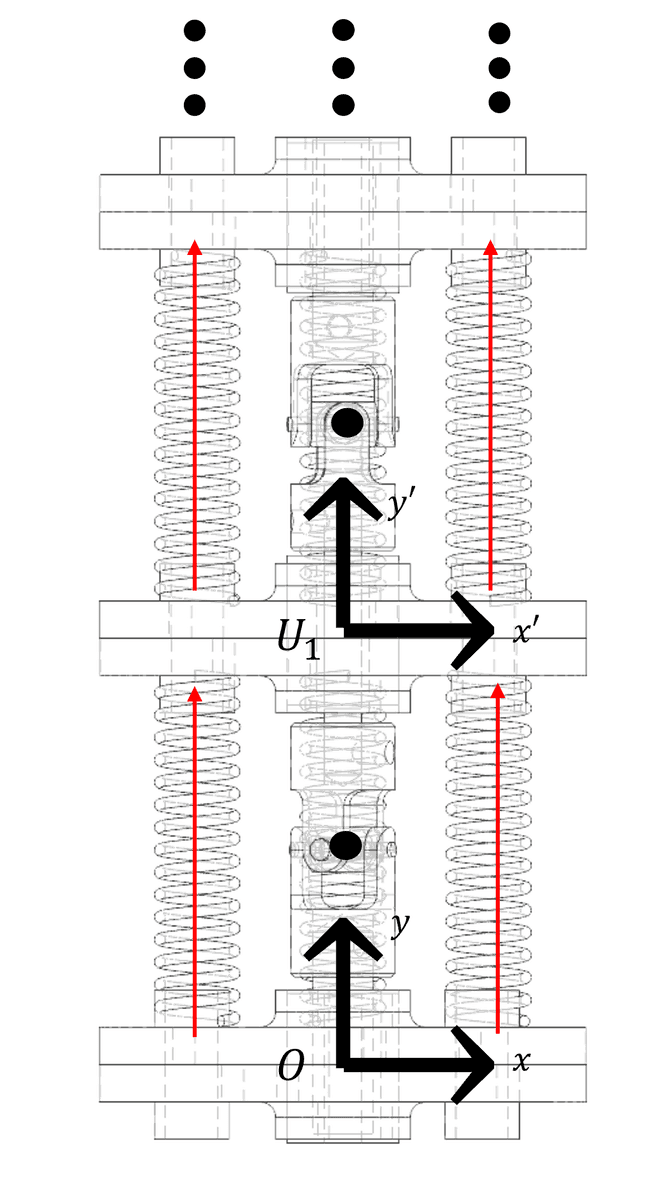
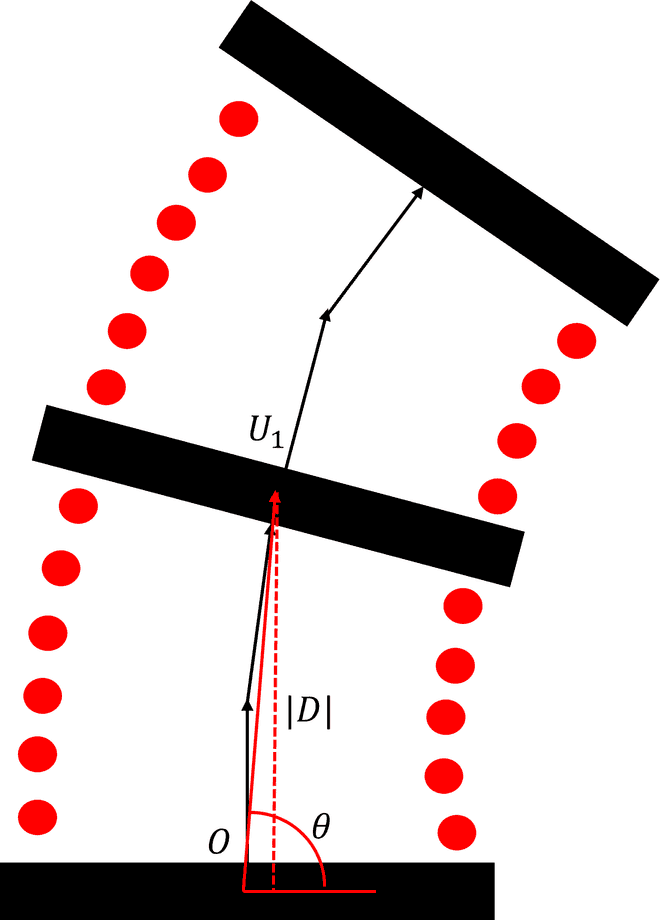
This yielded the motion/force relationship of each tendon, using a sufficiently elastic material such as galvanized steel cable (). The result is a section-wise adjustable model that determines the final position of the TDCR as a function of the joint angles and the compression of each module. This compression was approximated through instrumentation and simulation of the delta spring system, approximating it to a real case:
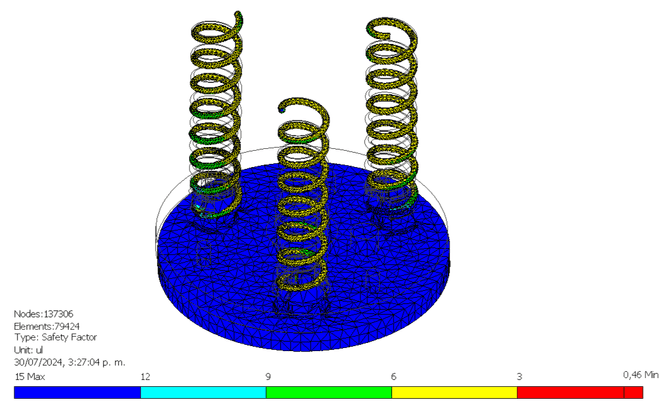
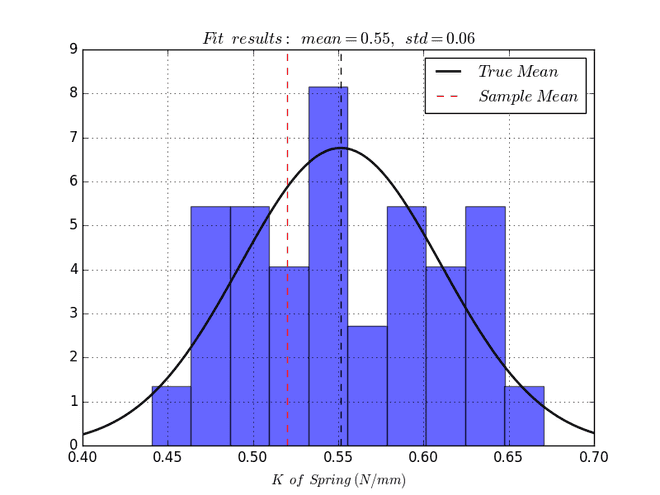
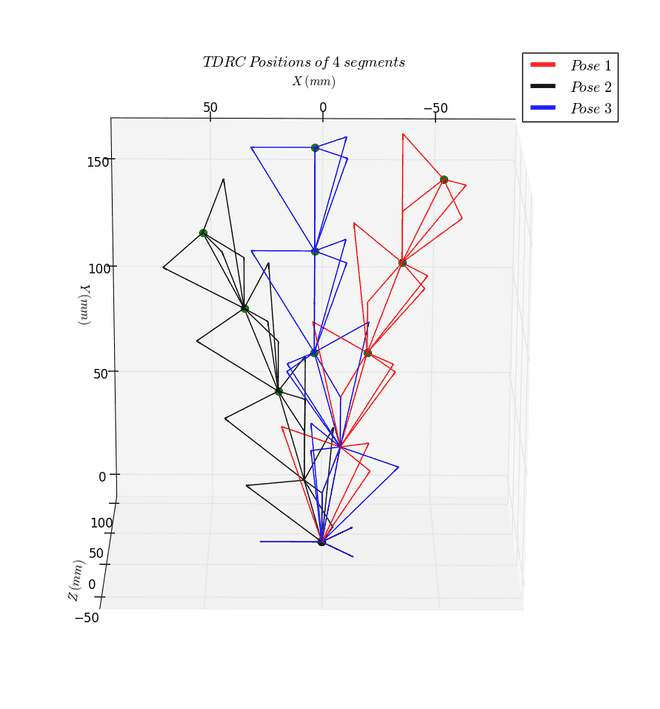
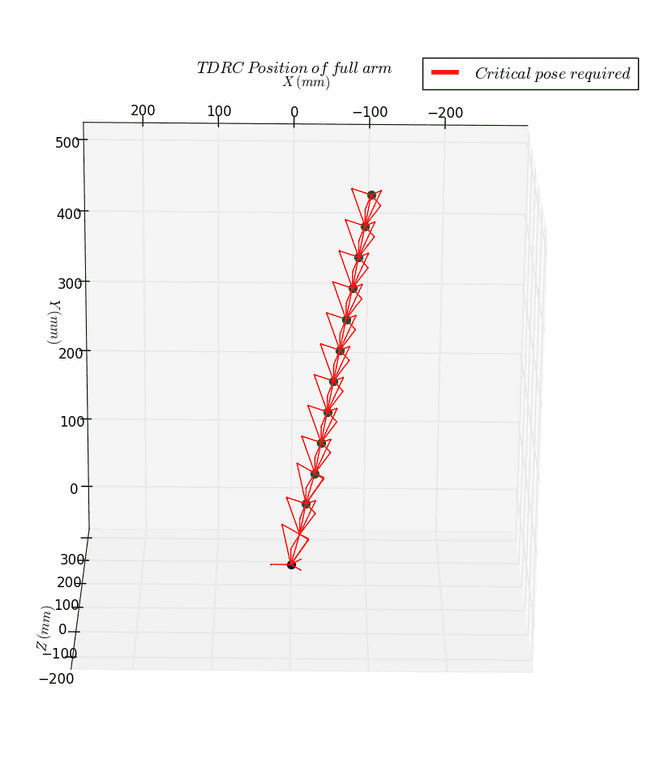
Once the compression and elongation motion was characterized, the kinematic simulation software was developed. The possible states obtained for different angle configurations are shown below, for the cases of 4 and 12 sections.
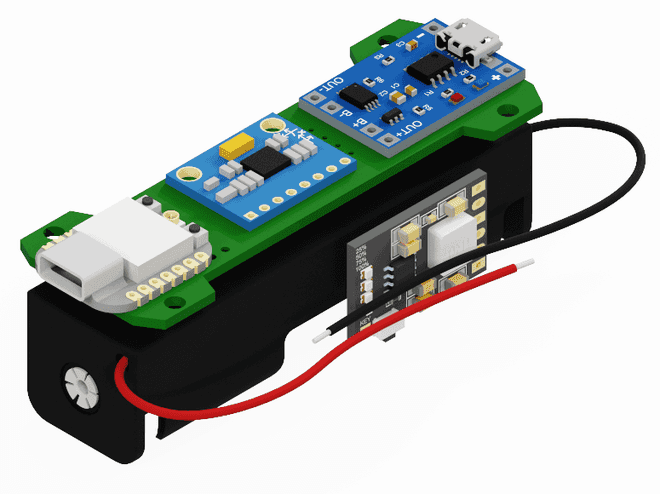
- Electronics Design and Fabrication: This includes selecting and configuring MyActuator brushless motors with integrated drivers, controlled over CAN, as well as integrating IMU and load sensors for the remote communication system, together with the power management and read/write systems for these motors. The PCBs of these systems are shown below:

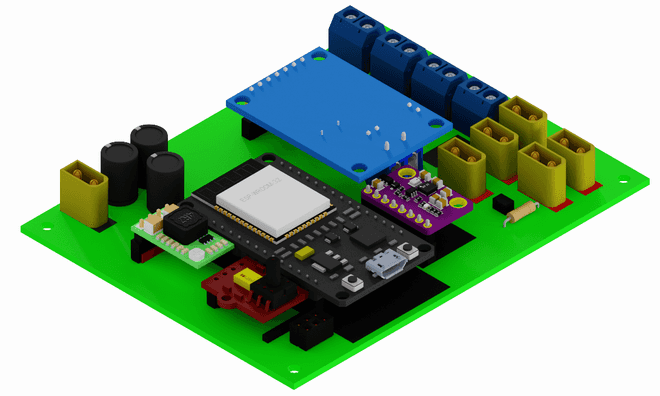
It also includes the internal board, called core, that controls the systems:

- System Assembly: The system was assembled following the initial design and validated through testing, iterating on its manufacture and improving its layout for control and handling. The following results were obtained during assembly:
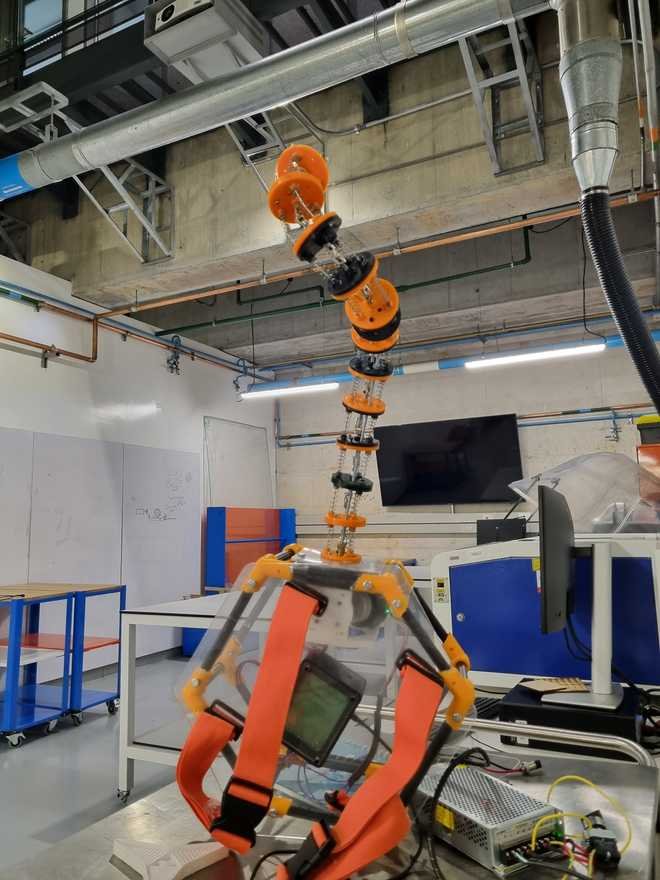
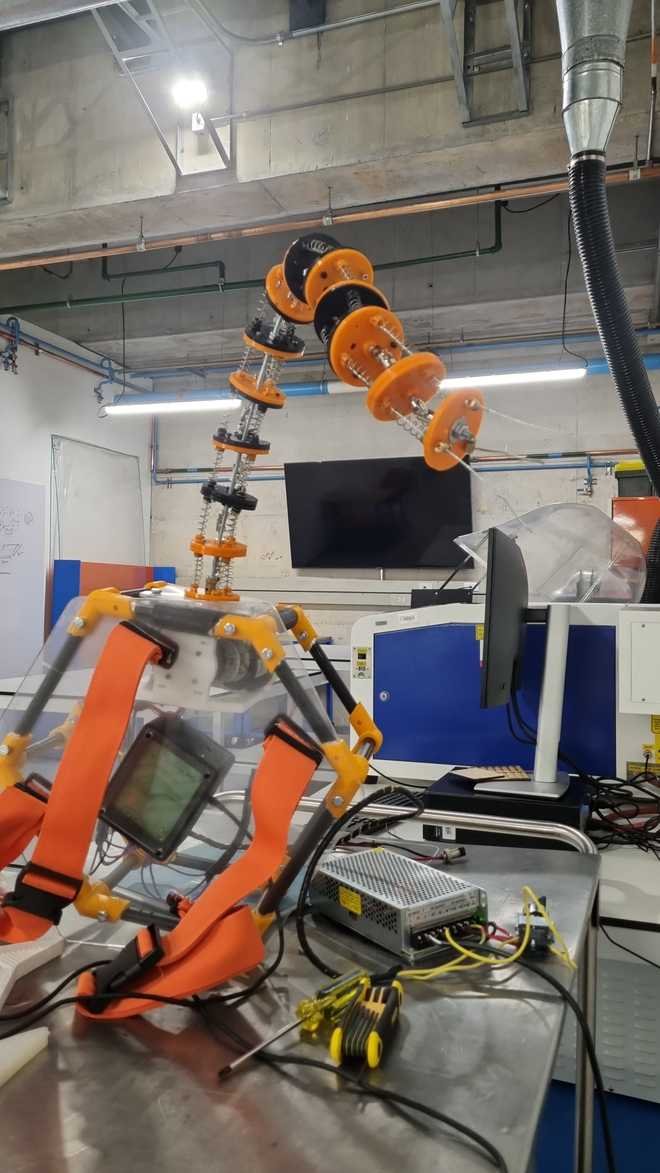
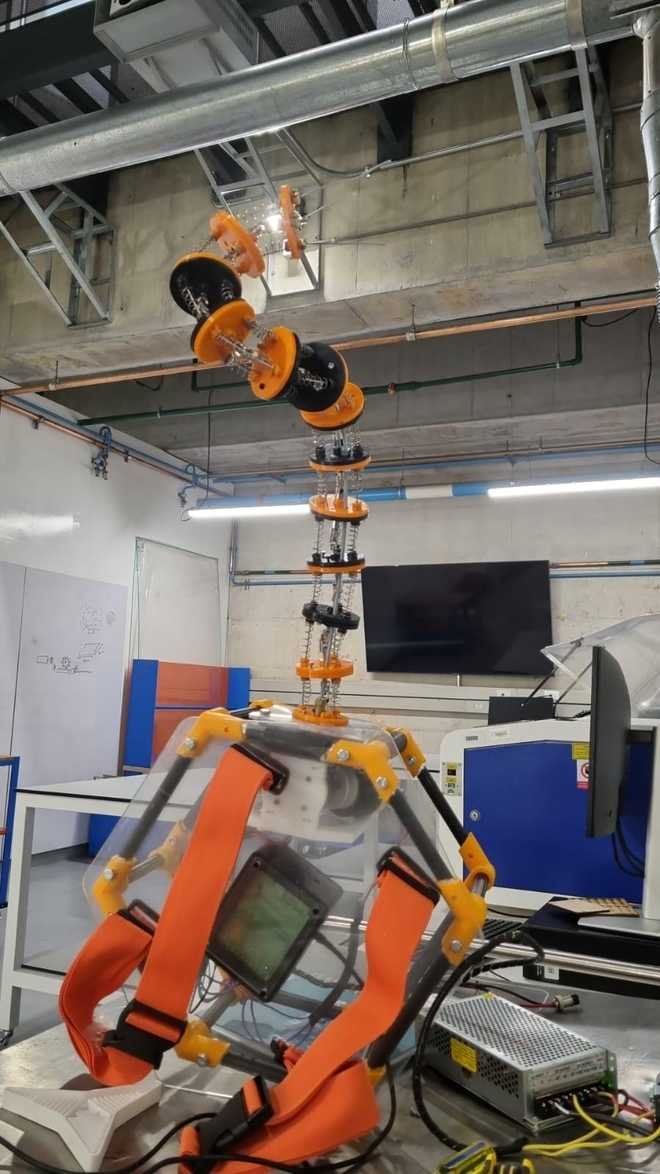
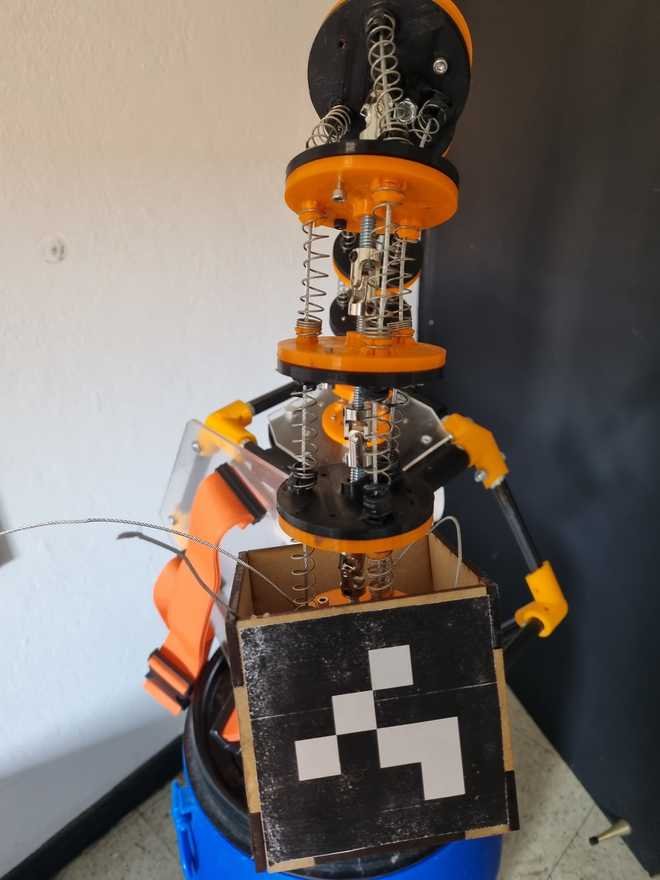
- Evaluation: Finally, the motion and effectiveness of the model were verified by applying the required torque to each tendon, checking the position using ArUco markers, and confirming minimal communication latency.

Results and Conclusions
The project demonstrated the potential of TDCRs to reach areas that are difficult for conventional arms, since they can operate under tighter geometric constraints while retaining part of their mobility. It also showed a considerable improvement in the motion offered by an integrated system compared with systems driven by gamepads or directly from a console.
-
Optimized Mechanical Design: Equally spaced modules and an efficient power transmission system improved the robot's maneuverability and stability when not over-tensioned.
-
Portable Control System: A portable control system based on head movements was implemented, enabling precise and responsive control of the robot. This improves interaction for people with upper-limb impairments, with a responsive reaction time.
-
Testing and Validation: The robot was evaluated in various scenarios, confirming its ability to perform complex movements.
This project establishes a versatile platform for research in robotics and emerging technologies, fostering advances in mechanisms analogous to traditional ones.